

Alfa Cytology's huPBMC-Mono mice are a specialized platform designed for the study of myeloid cell-mediated immune responses, including monocytes, macrophages, and dendritic cells. This model enables researchers to evaluate the role of myeloid cells in tumor microenvironment modulation, cancer vaccine efficacy, and macrophage-targeting therapies. With robust reconstitution of human myeloid lineages, the huPBMC-Mono model provides a physiologically relevant system for advancing immuno-oncology and inflammation research.
The huPBMC-Mono model is established by engrafting healthy donor-derived PBMCs into immunodeficient NCG or NSG mice, with a focus on enhancing the survival and function of human monocytes, macrophages, and dendritic cells. Through optimized conditioning and engraftment protocols, Alfa Cytology achieves consistent and functional reconstitution of key myeloid populations, including CD14⁺ monocytes, CD68⁺ macrophages, and CD11c⁺ dendritic cells. This model supports a stable experimental window of 3–4 weeks, allowing for comprehensive evaluation of myeloid-targeting therapeutics and their impact on the tumor immune microenvironment.

Functional Myeloid Reconstitution
Achieves robust reconstruction of human monocytes, macrophages, and dendritic cells in peripheral blood and lymphoid organs.

Tumor Microenvironment Relevance
Supports the study of myeloid cell infiltration, polarization, and function within the tumor microenvironment.

Broad Therapeutic Compatibility
Compatible with over 400 CDX and 400 PDX models for evaluating myeloid-targeting agents.

Stable & Reproducible System
High engraftment consistency with controlled variation in human myeloid cell populations.
Macrophage-Targeting Therapy Evaluation
Efficacy and mechanism studies of agents targeting macrophage checkpoints such as CD47-SIRPα, CSF-1R, and CD40.
Cancer Vaccine & Immunomodulator Research
Assessment of cancer vaccines, TLR agonists, and other immunomodulators that activate dendritic cells and enhance antigen presentation.
Tumor Microenvironment & Myeloid Reprogramming
Investigation of myeloid cell polarization, cytokine signaling, and strategies to reprogram suppressive myeloid populations
Overview
Validate that the huPBMC-Mono model supports human antigen presentation and induces antigen-specific CTL responses following immunization.
Study Information
Results
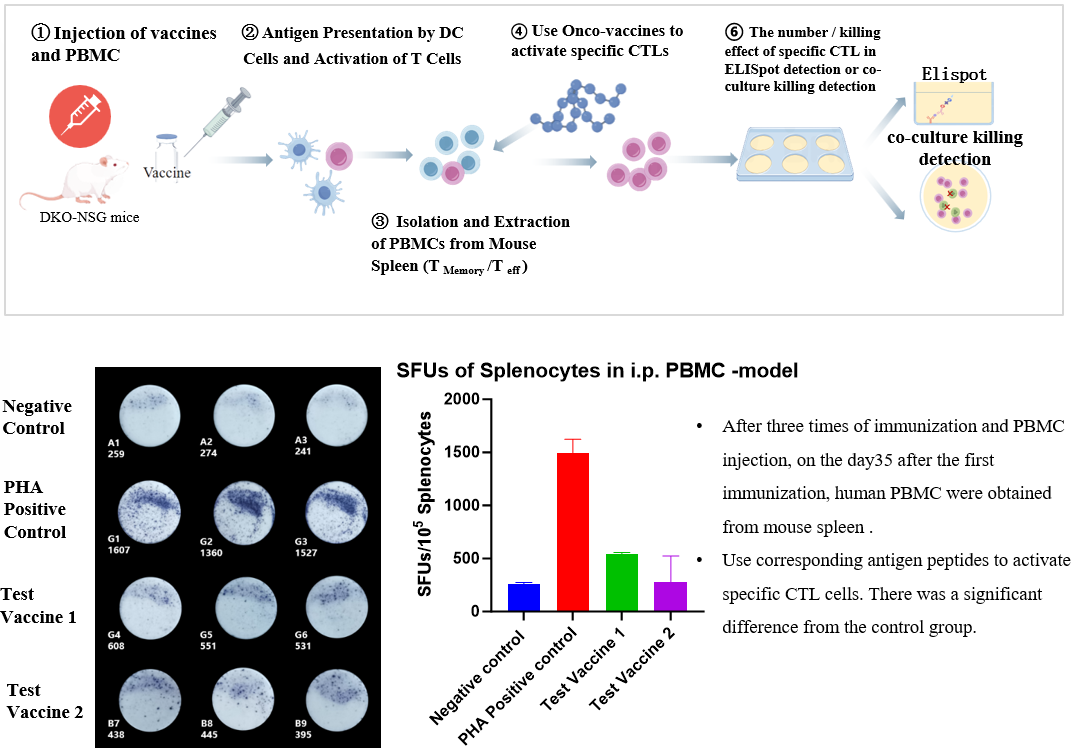 Fig.1 Antigen-specific human T-cell responses in a huPBMC-Mono model.
The huPBMC-Mono model is a powerful tool for dissecting the role of myeloid cells in immuno-oncology and inflammation. Alfa Cytology's Hu-Immune™ platform provides end-to-end services—from model establishment and study design to functional analysis—enabling you to gain deeper insights into myeloid-driven immune responses. Contact our scientific team now for customized solutions.
For research use only.

Alfa Cytology is a leading preclinical research partner specializing in humanized immune system mouse models for immuno-oncology and inflammation research.
Copyright © 2026 Alfa Cytology. All rights reserved.